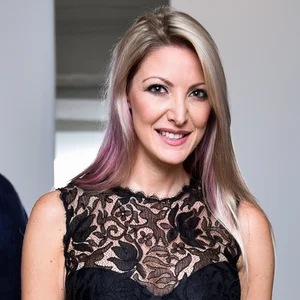
I asked ChatGPT who I was
I asked ChatGPT who Dana Randall is.
The first answer? A theoretical computer scientist. Not me, but I respect it.
The second answer got closer. Designer. Creative director. Accessibility advocate.
But what stood out was not accuracy. It was what was missing.
Because when you look at inclusive design as a field, you will find some incredible leaders who have shaped how we think about it:
Kat Holmes, who helped define inclusive design at scale and gave us the language of designing for exclusion
Victor Papanek, who grounded design in ethics and responsibility long before it was popular
Jina Anne, who brought accessibility into design systems and made it operational
Liz Jackson, who challenges the industry to center disabled voices and rethink who design is actually for
All of these perspectives are necessary.
Inclusive design is not one approach. It is layered.
Frameworks help us scale
Systems help us build consistently
Advocacy keeps us accountable
Ethics keeps us grounded
And there is another layer that often gets less attention. The experience layer.
Where I sit in that spectrum
If I had to define my perspective:
Accessibility should elevate the aesthetic, not limit it.
My work focuses on how inclusive design actually feels in a product. Not just whether it works. Not just whether it passes guidelines.
But whether it:
Feels calm
Feels intuitive
Feels supportive in real moments
The difference in approaches
Each leader in this space brings a different strength:
Some focus on structure and frameworks that help organizations scale inclusion
Some focus on systems that make accessibility repeatable and consistent
Some focus on ethics and ensuring design serves real human needs
Some focus on advocacy and shifting culture and power
My focus is different, but complementary.
I focus on:
Sensory experience
Emotional impact
Cognitive ease
The craft and execution of the interface itself
Because that is where inclusion becomes real.
My perspective is shaped by experience and empathy
Part of this comes from my own lived experience with neurodivergence and motion sensitivity. But it is not only about my experience.
It is about a commitment to:
Listening to others
Learning from different lived experiences
Expanding beyond my own perspective
Inclusive design cannot be personal only. It has to be collective. The more we understand how different people experience the world, the better we can design for it.
Designing for the spectrum
At CSUN, I gave a talk about designing for the spectrum. Not just permanent disabilities, but situational and temporary ones too. Because all of us move through that spectrum. We are distracted. We are overwhelmed. We are stressed. We are tired. And design should meet people in those moments.
Here is a clip from that talk: https://www.youtube.com/watch?v=OLnidSo38sc
There is room for all of us
This is not about one approach being better.
It is about recognizing that:
Frameworks create structure
Systems create consistency
Advocacy creates accountability
Ethics create purpose
Experience creates connection
Each layer strengthens the others. My contribution lives in that last layer. In this series, I want to explore what that looks like in practice.
Next up, I will walk through a fintech app redesign through this lens.